
Cold mornings are miserable. You leave the warmth of your duvet, and your toes hit ice-cold hardwood. It’s a shock to the system that no amount of coffee can fix. Now imagine stepping onto floorboards that feel like they’re holding the heat of a summer day. Or walking into a bathroom where the ceramic tiles are already toasty.
That isn’t a fantasy. That is the promise of radiant floor heating.
While some systems use wall panels, the most popular choice for homeowners is radiant floor heating (RFH). It works by hiding heating elements under the surface. You get either electric coils or tubing filled with hot water. The floor becomes the radiator. It warms everything in the room from the ground up.
Think about standing in sunlight on a winter day. The air might still be freezing, but your skin feels warm. That is radiant heat. Standard forced-air systems just blow hot air around. That air rises, cools down, and sinks back to the floor. Radiant heating skips the air movement. It keeps the temperature steady from your feet to your head.
The Economics of Warmth
You are probably wondering if this luxury is worth the price tag. The short answer is yes, if you look at long-term operation. These systems are generally more efficient than traditional furnaces. Studies suggest they can cut heating bills by 25 to 50 percent.
The best time to install this is during new construction. It is easier to weave the tubes or wires into the subfloor. But retrofitting an existing home is possible. Older homeowners often choose to install it in small zones, like a single bathroom or kitchen, rather than overhauling the whole house.
This isn’t a new idea. The Romans used hot water pipes under their floors. In Europe, it has been the standard since the 1970s. Beyond the savings, there are practical benefits. There is no loud furnace humming. No rattling ducts. It is silent.
For people with allergies, it is a game-changer. Forced-air systems blow dust, pollen, and pet dander around the house. Radiant floor heating eliminates that airflow. You breathe cleaner air while staying warm.
Two Main Types of Systems
Before you start tearing up floors, you need to know which type fits your home. There are two main categories: electric and hydronic.
Electric systems use resistive cables or mats. They are usually easier to install in small spaces. Hydronic systems use pipes circulating heated water. They are more complex to install but often cheaper to run in larger areas.
In this first part of the series, we are going to deep dive into hydronic radiant floor heating. We will look at how it works, the pros and cons, and what it takes to install it yourself. If you are considering a whole-house upgrade, this is where you start.
How Hydronic Radiant Floor Heating Works
Hydronic systems move heat using water. But not just any water. The water is heated by a boiler or a tankless water heater and then pumped through a network of pipes. These pipes are embedded in the floor.
The heat from the water transfers through the pipe material into the floor slab or subfloor. From there, it radiates upward.
This method is highly efficient because water holds heat longer than air. It doesn’t cool down instantly when the boiler cycles off. You get a more consistent temperature.
“Hydronic systems are highly efficient because water holds heat longer than air, providing a more consistent temperature.”
Why Choose Hydronic Over Electric?
Electric heating is simpler. But hydronic heating has advantages for larger homes.
- Lower Operating Costs : Water is cheaper to heat than electricity in many regions.
- Zoning : You can control the temperature in different rooms separately.
- Speed : Modern systems can heat up faster than old-school radiators.
However, it is not for everyone. The installation is more invasive. You need a boiler. You need pumps. You need to run pipes across the basement or crawlspace.
If you live in a small apartment, electric might be better. If
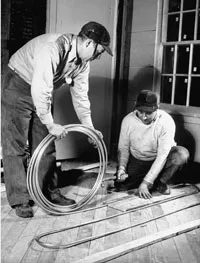
Choosing between electric and hydronic radiant floor heating (RFH) isn’t just a preference; it’s a calculation based on scale and budget. If you are heating an entire house, electric systems quickly become a financial drain. The energy draw is simply too high. Hydronic systems, which circulate heated water, are the only cost-effective choice for whole-home comfort.
The decision also hinges on your construction phase. For new builds, hydronic is the standard. Retrofitting an older home with hydronics is possible, but it’s invasive. You’ll likely need to tear up existing floors, driving up labor costs significantly.
Upfront Costs and Longevity
Hydronic systems demand a higher initial investment compared to traditional forced-air furnaces. Here is the breakdown for a typical 2,000-square-foot home:
- Forced-air furnace: $4,000 to $8,000
- Hydronic RFH with boiler: $14,000 to $44,000
The premium price tag buys you efficiency and lifespan. A standard furnace typically lasts 10 to 25 years. A properly maintained hydronic system can serve you for up to 40 years. You are paying more upfront, but the total cost of ownership over decades often levels out.
Choosing a Heat Source
Hydronic systems are flexible. You aren’t locked into a single fuel type. Potential heat sources include:
- Oil-fired boilers
- Gas-fired boilers
- Kerosene heaters
- Solar water heaters
- Standard gas water heaters
Your choice depends on climate and home size. A large house in a cold climate like Canada likely requires a dedicated boiler system to handle the load. A smaller home in a mild climate like Florida might run efficiently off a standard water heater.
Wet vs. Dry Installation Methods
If you opt for a gas-fired boiler in a new construction, the installation happens before the final flooring goes down. There are two distinct methods: wet and dry.
Wet Install
This method embeds the heating tubes in concrete. You might have a full slab beneath the subfloor or a thin layer of concrete between the subfloor and the finish surface. Concrete acts as a thermal mass. It has high density and low conductivity, meaning it absorbs heat and holds it. Think of a concrete patio retaining warmth long after sunset, unlike a wooden deck that cools instantly.
Dry Install
Dry systems place PEX tubing directly under the subfloor, without the concrete layer. This makes installation cheaper and faster. However, without thermal mass, the system can’t store heat. It must run at higher temperatures to maintain comfort. Dry installs also require reflective insulation beneath the tubes to force heat upward, rather than letting it dissipate into the structure.
The trade-off is clear. Wet systems take longer to heat up but provide steady, lingering warmth. Dry systems respond quickly but may cycle more frequently to maintain temperature.
How the System Moves Heat
The boiler or water heater connects to a manifold. This device distributes water from a single source into multiple zones. You can program different temperatures for different rooms. From the manifold, a recirculating pump pushes hot water through PEX tubing.
PEX (cross-linked polyethylene) is the industry standard for these loops. It is:
* Flexible
* Leak-free
* Non-toxic
* Capable of withstanding high temperatures
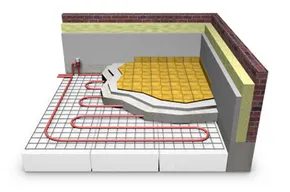
The tubing is laid out in a specific pattern under the floor. The finish material—hardwood, tile, or carpet—sits on top. The heat transfers from the tubes, through the subfloor, and into the room.
Maintenance and Repair Realities
Hydronic systems are low-maintenance on the routine end. The boiler needs an annual check-up. Modern pumps are often water-lubricated, reducing wear. But when things break, the stakes are high.
You cannot DIY a hydronic repair. The complexity requires a professional. If the boiler fails completely, replacement costs can equal the initial installation price. It is a significant financial risk if the system is old.
This complexity is why electric systems remain popular for smaller projects. They are simpler. They lack the plumbing infrastructure. But for whole-home heating, hydronic efficiency is hard to beat.
The next step is understanding the alternative. Electric radiant floor heating offers a different set of pros and cons.
Inside the Mats: Resistance Wires and Polymer Cores
What exactly is happening inside those thin plastic mats? The heating elements aren’t the bulky coils you see in a portable space heater or on a stove top. They are resistance wires. Specifically, copper or nichrome wire.
Nichrome is an alloy of nickel and chromium. It has high electrical resistance. That resistance generates heat when electricity flows through it. The wires are zigzagged through a waterproof polymer mat. Think of it as a giant electric blanket with the fabric stripped away. You roll it out. You wire it up. It’s simple geometry meeting basic physics.
Cost, Timing, and Flooring Compatibility
Most homeowners install electric radiant floor heating (RFH) in single rooms. Heating an entire house with electricity is expensive. But you can lower the bill if your utility company offers off-peak rates. Charge the mats overnight at a discount. Use that stored heat during the day.
Which flooring works best? Ceramic tile is the gold standard. It conducts heat efficiently. Hardwood is also a good choice. Carpet? It’s thicker. It insulates rather than conducts. If you insist on carpet, you need the right padding.
There are two types: slab and ribbed. Slab pads are flat. Ribbed pads have a waffle pattern. For RFH systems, a 3/8 inch (.68 cm) slab foam rubber pad is recommended. It allows more heat to pass through to the surface.
Installation Logistics and Maintenance
The heating coils sit between the subfloor and the finish floor. This placement means short heat-up times. It takes about 30 minutes to an hour for the floor and room to warm up. Set a simple thermostat or switch. Turn it on an hour before you get out of bed. Your bathroom tile will be ready to greet your bare feet.
You cannot install these mats over existing flooring. You must tear up the current floor first. This makes renovation the ideal time to switch. Remove the old floor. Lay the mats. Apply tile glue and grout. The adhesive and grout do not affect the heating mats. Once the new floor is down, forget about the system. It requires no regular maintenance.
Troubleshooting and Safety
Electric systems rarely fail. When they do, homeowners can often fix them. You don’t always need a pro. Just follow safety protocols. Turn off the power before inspecting or replacing any panels. Keep the circuit breaker off. Verify the power is dead before touching anything.
This is a low-maintenance solution for specific spaces. It doesn’t replace central heating for the whole house. But for a bathroom, sunroom, or kitchen, it offers immediate comfort. The initial cost is higher than baseboard heaters. The operating cost can be managed with smart scheduling. The durability is high. The maintenance is near zero.
Beyond the Floor: Driveway De-icing
There is another application for radiant heat. Hydronic tubes can be installed under driveways and sidewalks. This melts snow and ice automatically. No shoveling required. You wake up to a clear path. Neighbors might envy you. You might also avoid the physical strain. Snow shoveling causes heart attacks and accidents. Many people die each year from the effort. Eliminating that risk is a significant benefit.
Hydronic and electric options both exist. Each has pros and cons. The choice depends on your climate, budget, and renovation plans. Electric is easier for retrofitting single rooms. Hydronic is better for whole-house heating or outdoor applications.