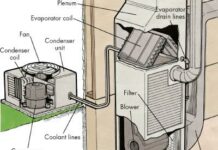
Your oil furnace has a few moving parts that silently dictate how much heat you get and how much you pay for it. Two of the most critical components live in the stack and the plenum area. The draft regulator and the limit switch. Get them wrong and you are burning money. Get them right and the system runs clean.
Managing Chimney Draft with a Regulator
The draft regulator sits right on the stack. When your burner turns off, that valve stays closed. It seals the chimney. When the burner fires up, it opens automatically. Air rushes in to support the flame.
You should listen to your furnace. Rattling? That is a red flag. Soot buildup in the flue? Another sign. These noises and messes mean the draft is off.
Too much air leaks up the chimney. You are literally heating the outdoors. That wastes heat. Too little air? The fuel doesn’t burn completely. You waste fuel and create soot. Both scenarios hurt your wallet.
Adjusting the airflow is mechanical. You move a counterweight.
– Screw the counterweight inward to increase airflow.
– Turn it outward to decrease airflow.
There is a catch. You should not touch this yourself. The draft regulator requires a professional service person. Include this adjustment in your annual maintenance contract. Let the pros dial it in.
Diagnosing Blower Issues with the Limit Switch
Look below the plenum. You will find the limit switch. It is a safety control. Its job is simple. If the plenum gets too hot, the switch shuts off the burner. It prevents a fire. It also controls the blower.
When the burner shuts off, the blower keeps running for a bit. Then the limit switch kicks the blower off as the temperature drops.
Does your blower run non-stop? Even when the house is warm? That is annoying. It wastes electricity. It creates noise. There are two reasons this happens.
- Your thermostat blower control is set to ON.
- The limit switch itself needs adjustment.
Check the thermostat first. Flip the switch from ON to AUTO. Test the system. If the blower still never stops, the limit switch is the culprit.
Adjusting the Fan Limit Switch
You can adjust this switch yourself. It is not as dangerous as touching the burner.
Remove the cover of the control. Look underneath. You will see a toothed dial.
Do not touch the side marked LIMIT. That is for the high-limit safety cutoff. Leave it alone.
Focus on the side marked FAN. There are two pointers here.
– The upper pointer sets the temperature at which the blower turns on.
– The lower pointer sets the temperature at which the blower turns off.
These pointers need space. Set them about 25 degrees apart. This gap allows the air to warm up slightly before the fan starts, preventing cold drafts.
Here is a solid baseline setting:
– Set the upper pointer to 115 degrees Fahrenheit (46.1 degrees Celsius).
– Set the lower pointer to 90 degrees Fahrenheit (32.2 degrees Celsius).
This range works for most residential systems. It keeps the air warm enough to feel comfortable while avoiding unnecessary fan runtime.
A Warning on Burner Adjustments
Do not try to adjust the oil burner itself.
The burner mixture