The electrical distribution board acts as the nervous system of your house. It sits at the junction between the utility company’s external grid and your internal wiring. If this component fails, everything goes dark. If it’s chosen poorly, you risk tripping breakers unnecessarily or, worse, creating a fire hazard.
Choosing the right one isn’t just about picking a metal box. It requires understanding your specific load, future expansion needs, and local safety codes.
Understanding the Core Function
First, let’s strip away the jargon. The tableau de distribution (or main panel) distributes electricity from the main service entrance to individual circuits. It houses the main disconnect switch and individual circuit breakers. Its job is to protect your wiring from overloads and short circuits.
Most homeowners focus on the price tag. That’s a mistake. The cost of a panel is negligible compared to the cost of re-wiring a house because the panel couldn’t handle the HVAC system or EV charger.
Key Criteria for Selection
You need to evaluate several factors before buying. Here is what matters.
1. Capacity and Amperage
The amperage rating determines how much power your home can draw. Common residential ratings are 100A, 200A, and sometimes higher for large homes.
- Older homes: Often have 100A panels. This might suffice if you don’t have electric heating or EV charging.
- Modern homes: Typically require 200A. This supports high-draw appliances like heat pumps, dryers, and multiple AC units.
Ask yourself: How much power do you use now? How much might you use in five years? A 200A panel offers headroom. A 100A panel might limit your lifestyle changes.
2. Number of Circuit Positions
Count your existing circuits. Then add 20%. You will always need more outlets than you think.
- Standard panels: Often come with 12 to 16 spaces.
- Large panels: Can handle 30, 40, or even 60 circuits.
Don’t buy a panel with exactly enough slots. You will regret it when you add a workshop or finish the basement. Look for a panel that allows for plug-on neutral breakers if your region supports them. They are faster to install and often cheaper than standard breakers.
3. Brand Compatibility and Availability
Stick to major brands. Siemens, Square D, Eaton, and Schneider are reliable choices. Why? Because breakers and accessories are readily available. If you buy a obscure brand, you might find yourself stuck with a dead panel because the manufacturer discontinued it.
“Consistency is key. Mixing breaker brands in the same panel is often illegal or dangerous unless the manufacturer explicitly allows it.”
Check if the panel is UL-listed (or CE-certified in Europe). This ensures it has been tested for safety. Never skip this step.
4. Physical Dimensions and Enclosure Type
Where will you put it?
- Indoor vs. Outdoor: If the panel goes in a garage or exterior wall, it needs a weatherproof enclosure.
- Depth: Some panels are
The Command Center of Your Wiring
Your electrical panel isn’t just a metal box. It is the brain of your home’s power distribution. If it fails, everything stops. You need it placed inside the housing known as the gaine technique du logement or GTL. This enclosure keeps the wiring organized and protected. Because the box itself is ugly industrial plastic, most people hide it in a garage, a laundry room, or a closet. But hiding it doesn’t mean locking it away. It must remain accessible for maintenance or emergency shutdowns.
The GTL sits within a larger zone called the Espace technique électrique du logement (ETEL). This requirement has been mandatory since 2015. The ETEL gathers all devices responsible for powering the house into one designated area. This centralization makes troubleshooting easier.
Components Inside the Box
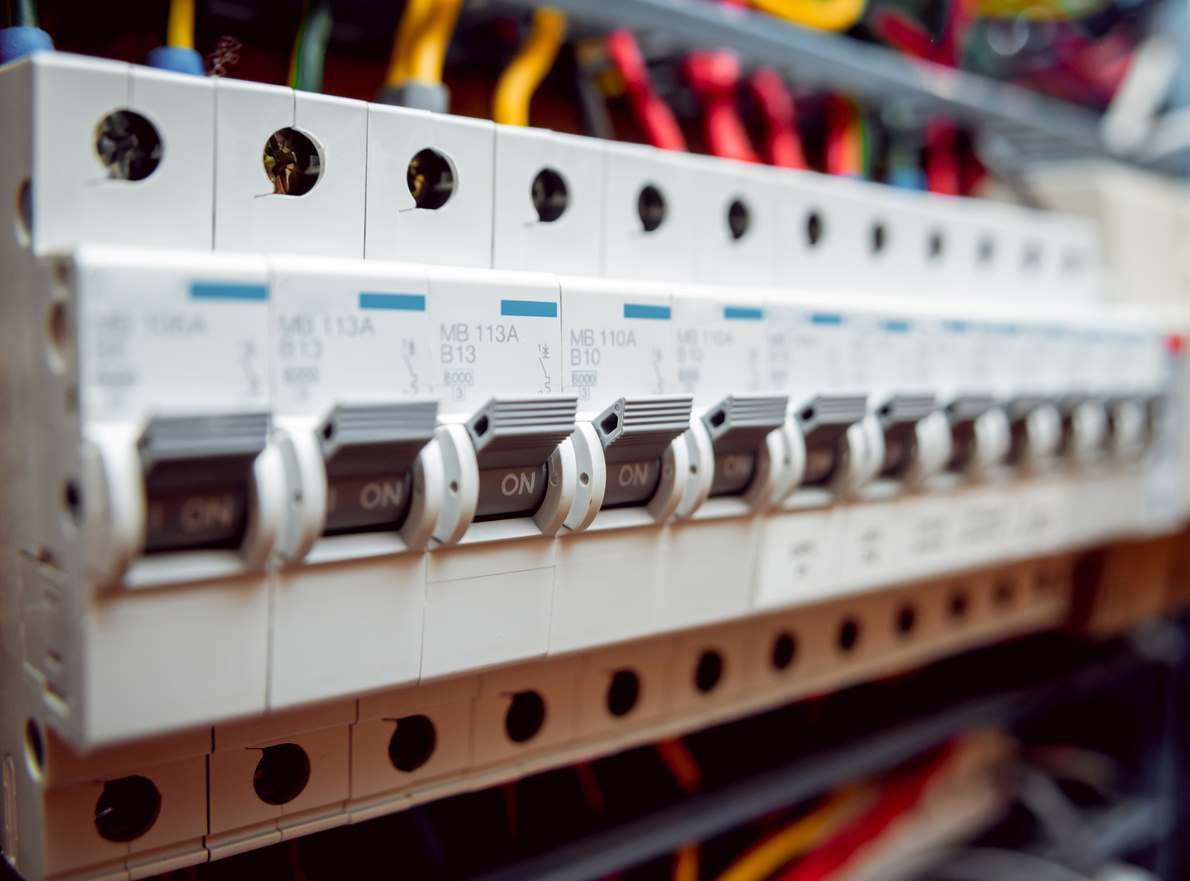
The panel itself is a cabinet containing all interior circuits. It powers your lights and your appliances. Inside, you will find modules that ensure safety. These include circuit breakers, differential switches, and surge protectors. These aren’t optional extras. They are the difference between a tripped breaker and a house fire.
Beyond the basic switches, norms mandate specific components. You need a grounding bar. You need terminals. You need protective shutters on outlets to prevent children from sticking objects in them. You can add more modules depending on your needs. But every design must follow the NF C 15-100 standard. This French norm dictates safety rules, grounding requirements, and how many outlets you need per room. Ignoring it is illegal and dangerous.
Pre-Equipped vs. Bare Panels
Choosing the right panel matters. Many homeowners hire professionals for this. Companies like E-Planetelec sell high-quality equipment online if you prefer a DIY approach with premium parts. They stock major brands. But the real choice is between a pre-equipped panel and a bare one.
A pre-equipped panel comes ready to go. It includes the essentials. You get a differential switch on each row. This protects against electric shocks. You get circuit breakers to protect specific wires. You get a grounding bar to divert leakage currents into the earth. Moisture or aging insulation can cause these leaks. The bar handles them safely.
A bare panel gives you freedom. It contains only the mandatory base components. You buy the extra modules separately. This allows customization. An electrician can help you select the right add-ons. You might want a day/night contactor. This switches your water heater to off-peak hours. It saves money. You might add a timer for outdoor lights. Or a relay to control lights from multiple switches. A load shedder is another option. It cuts power to non-essential circuits if usage gets too high. This also lowers your bill.
Sizing for Your Space
The size of your panel depends on your home’s square footage. The panel has rows. Each row holds a module. The number of rows you need is not random. It is dictated by the size of the dwelling.
For a small apartment under 35 square meters, you need at least two rows. This covers the basics. For a medium home between 35 and 100 square meters, you need three minimum. For large homes over 100 square meters, you need at least four rows.
Surface area is only half the equation. You must also count the electrical devices. Every appliance and light fixture needs protection. If you have ten distinct circuits, you need ten breakers. Each breaker takes up space. You must calculate the total modules required. Then you choose a panel that fits. Miscalculate, and you will run out of room. Or you will buy a box that is too big and wastes space. Plan carefully.