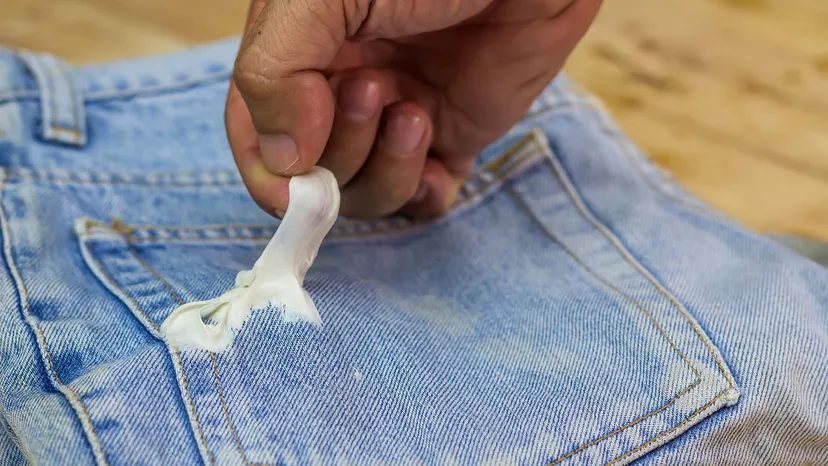
Chewing gum is a mouth candy that becomes a textile terrorist the moment it touches your favorite shirt. It happens fast. You chew, you drop, or a kid has a bad day, and suddenly you are holding a garment that feels like it has been glued to the floor. The panic sets in. You worry about the stain, the damage, and the cost of professional cleaning.
But you don’t need a dry cleaner. You just need chemistry and a bit of patience. This is exactly how to get gum out of clothes using methods that actually work on different types of fabric. Whether you have a heavy denim jacket or a silk blouse, there is a way to save it.
Freezing Thick Fabrics
Heavy materials like sweaters, jeans, and coats hold gum tight. The adhesive bonds into the thick fibers. Pulling it warm just stretches the mess and drives it deeper. The goal here is to make the gum brittle.
You need ice cubes, a zip-top bag, and a butter knife.
Put a few ice cubes into the bag. Seal it tight. Lay that cold block directly over the gum wad. Let it sit. You can also rub an ice cube directly on the spot if the fabric allows. Wait until the gum turns hard. It loses its elasticity when it gets cold. It becomes brittle plastic instead of sticky goo.
Once it is frozen solid, take your blunt knife. Gently scrape the gum. It should flake off in chunks. Work slowly. Don’t saw through the fabric. If it resists, apply more ice. Do not force it.
Saving Delicate Materials
Silk, lace, and thin cottons are trickier. You cannot scrape them with a knife without risking tears. You need a softer touch.
First, pick off any loose gum by hand. Be careful not to stretch the weave. Then, you have two options. You can wrap the entire garment in a plastic bag and put it in the freezer for an hour. Or, you can apply an ice cube directly to the stain for several minutes.
When the gum is frozen, do not use a metal blade. Use an old toothbrush. Brush the area firmly but gently. The bristles will dislodge the frozen bits without damaging the threads. If any sticky residue remains, the brushing action usually lifts it away from the delicate fibers.
The Ice Sandwich Method
This technique works well when you need to freeze the gum from both sides to ensure it hardens completely. It is especially good for items where you want to protect the back of the fabric from ice damage.
Grab two ice cubes. Find the gum on the garment. Place one ice cube directly underneath the fabric, right behind the gum. The less fabric between the ice and the gum, the better. Balance the second ice cube on top of the gum.
Wait thirty minutes. The cold needs to penetrate both layers. Remove both cubes. Lay the garment flat on a table. Use the non-serrated edge of a knife to scrape the gum off. It should come away cleanly.
Before you wash the item, pre-treat the spot. Apply a drop of laundry detergent or enzyme cleaner. Rub it in lightly. Then wash the garment as you normally would. This removes the final oily traces that freezing leaves behind.
Why Cold Works Better Than Heat
People often try to melt gum with heat. That is a mistake. Heat makes gum softer and stickier. It forces the adhesive into the fiber pores. Cold does the opposite. It reduces the molecular mobility of the polymers in the gum. The stickiness vanishes. The gum hardens. It loses its grip.
That is the science. The ice cube is not just a trick. It is a physical state change.
Other Solutions If You Lack Ice
What if you are at work? Or the freezer is full? You have other options.
Rubbing alcohol is a strong solvent for gum adhesives. Put some on a cotton swab. Dab the gum. The alcohol breaks down the sticky bonds. Once it feels less tacky, scrape it off with a plastic spoon or a dull knife.
Hot water can also help. Soak the area in hot water. The heat softens the gum enough to peel it off. Be careful with delicate fabrics that might shrink.
Peanut butter is an odd but effective remedy. The oils in the peanut butter interfere with the gum’s adhesive properties. Smear a small amount on the gum. Wait a minute. Scrape it off with a butter knife. You must wash the garment immediately after. Otherwise, you will just have a gum-stained, peanut-butter-covered shirt.
White vinegar works similarly for residue. Heat a small amount of vinegar. Do not boil it. Apply it with a paper towel. Rub the area with a laundry brush. The acid helps break down the remaining sticky film.
What About Hair or Carpets?
The same logic applies elsewhere. For hair, dab an ice pack on the knot for ten to fifteen minutes. The gum freezes. It loses its stickiness. It slides out much easier than warm gum.
For carpets, put ice in a zip-lock bag. Leave it on the gum for fifteen to twenty minutes. Scrape it off. Treat the area immediately to avoid staining. Carpets absorb liquids fast. Speed matters.
Leaving a Mark?
Sometimes the gum comes off, but a dark spot remains. This is the oil residue from the gum itself. Treat it with a stain remover spray. Or mix laundry detergent with hot water. Rub it gently. Wash according to the care label.
Check your pockets. Always. It is the only real prevention. If gum ends up in the dryer, freeze it. Scrape it. Do not run the dryer on a gum-covered load. You will bake it into every item in the drum.
The stain is gone. The fabric is saved. But there is always that one shirt you didn’t check. The one that slips through. You will find it. You will fix it. Or you will donate it. Either way, the rest of your wardrobe stays sticky-free.