Melons are the undisputed kings of summer. That sweet, perfumed aroma, the juicy flesh, the undeniable scent of July—it’s what makes every backyard garden feel like a slice of paradise. Yet, almost every year, gardeners watch their plants struggle. You get a few small fruits. They’re watery. They lack sugar. It’s frustrating.
Who hasn’t dreamed of tripling their yield? Of biting into a melon that actually tastes like something you bought at a high-end market?
The answer isn’t fertilizer. It’s not more water. It’s a single, specific action you take in June.
Why Your Melons Are Failing: The June Mistake
Most gardeners make the same error. They see green vines and think more is better. They leave the main stem and side branches to grow wild. They let the foliage run rampant.
This is a mistake.
Melons are Mediterranean plants. They are energy hogs. From day one, they pump resources into root systems and leafy vegetation. The main stem shoots out. Leaves unfurl. It looks healthy. It looks like success.
But here is the catch: The main stem does not produce fruit.
The Science of Pinching: Redirecting Energy
To get fruit, you need to force the plant to change its strategy.
The fruit-bearing flowers—specifically the female flowers that turn into melons—do not grow on the primary vine. They grow on secondary branches, also known as axillary shoots. These emerge from the leaf axils along the main stem.
If you let the main stem grow unchecked, the plant wastes energy. It keeps growing longer and longer without producing fruit. The energy goes into leaves. Leaves are great for photosynthesis, but they don’t put sugar in your mouth.
By pinching the main stem, you stop vertical growth. You force the plant to branch out laterally. Those new secondary branches are where the magic happens.
The Consequences of Neglect
When gardeners ignore this step, the results are predictable.
You end up with a tangled mess of vines. A jungle. It looks impressive from a distance. Up close, it’s a disaster.
- Competition: The secondary branches fight for resources.
- Small Fruit: The melons that do form stay tiny. Some are the size of a golf ball.
- Poor Taste: They lack sugar. They are bland.
This happens in suburban gardens and rural plots alike. People are afraid to cut the plant. They think they are harming it. They are wrong.
The Golden Rule: Pinch in June
The secret weapon of professional growers is simple.
Pinch the main stem.
This isn’t pruning for aesthetics. It’s pruning for production. You are redirecting the plant’s hormonal signals. You are telling it: Stop growing up. Start growing out. Start growing fruit.
Do this in June. That is when the main stem has established itself but hasn’t yet wasted too much energy on unproductive growth. The timing is critical. Do it too early, and the plant hasn’t gained enough strength. Do it too late, and you’ve missed the window for maximizing secondary branches.
The result? A plant that focuses its energy on developing those axillary shoots. The fruit set increases. The melons get bigger. The sugar content rises.
It sounds counterintuitive. Cutting the plant to help it grow feels wrong. But nature rewards discipline.
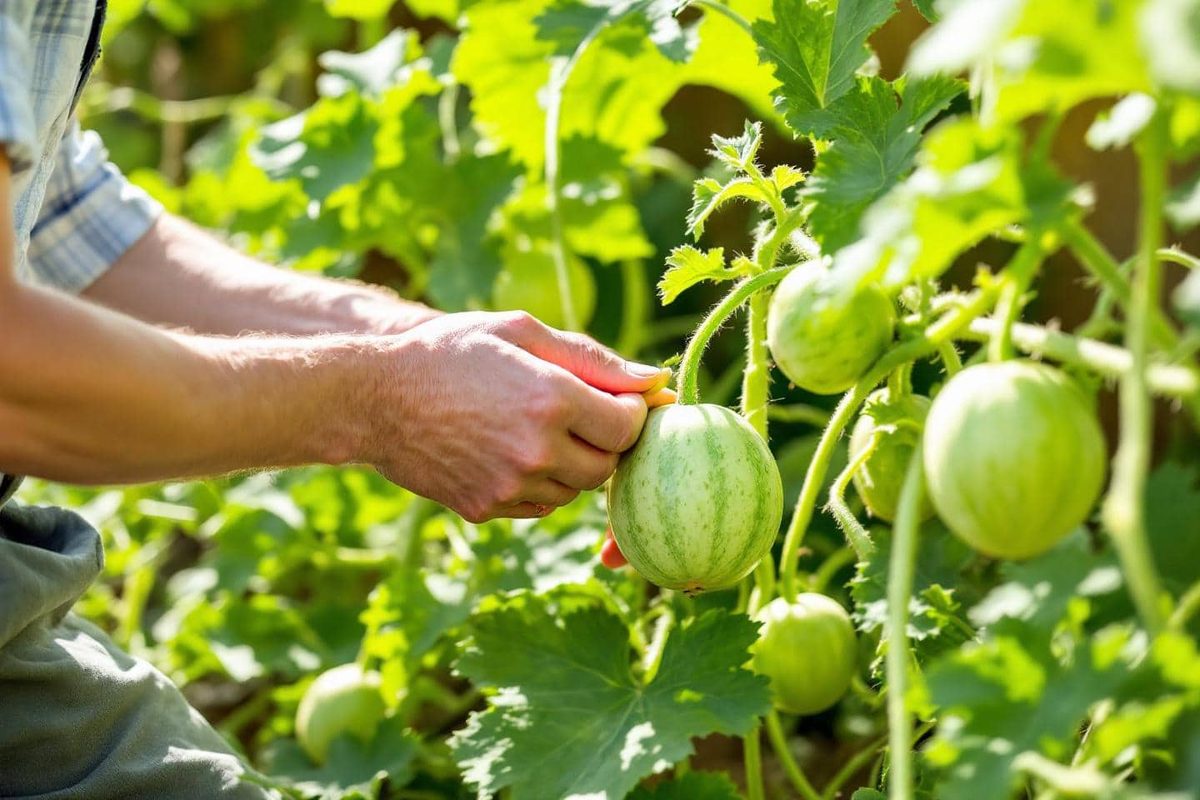
June hits, and the vines are going wild. You could let them run rampant, or you could do what old-school market gardeners have done for centuries. You pinch them.
It sounds aggressive. It’s not. It’s precise.
The goal isn’t to mutilate the plant. It’s to redirect its energy. Instead of growing endless leafy sprawl, you force the melon to focus on fruit. Sugar. Size. Flavor.
Here is exactly how to do it without killing the vine or stressing yourself out.
The Timing: Don’t Wait for June to End
You are looking for the “true leaf” stage. Not the first cotyledons that pop up at germination. The real, jagged-edged true leaves.
Most guides say wait for three or four true leaves. That’s safe. But if you are growing heirloom varieties, go earlier. As soon as you see two solid, well-formed true leaves, you intervene.
Why? Because you are stopping the main stem before it gets weak. You cut just above the second leaf. Use your thumbnail. It’s clean. It heals faster than a jagged tear from shears. If you prefer tools, use fine-tip secateurs. Sterilize them. A little hygiene goes a long way in preventing disease.
This single cut triggers a biological response. The plant panics slightly. It pushes out two robust lateral shoots from the axil. These are your new main lines.
Step-by-Step: The Pinching Protocol
Follow this sequence. Do not skip steps. The geometry of the vine matters.
- The First Cut: Pinch the main stem just above the second true leaf.
- Wait for Lateral Growth: Let the two new side shoots grow. Watch them. They will be vigorous.
- The Second Cut: When these side shoots reach five or six leaves, pinch them again. Cut just after the third leaf. This creates two new tertiary branches on each side shoot.
- The Result: You now have a structured framework. The female flowers will appear on these new branches.
Here is the critical filter: Keep only the strongest three stems.
Three stems are enough. More than that, and the plant divides its energy too thinly. You want concentrated power, not a sprawling mess. Channel everything into those three lines.
Why This Increases Yield and Flavor
You might think fewer stems mean fewer melons. You’d be wrong.
By limiting the vegetative growth, you force the plant to reproduce. It shifts from “grow more leaves” to “make more fruit.” The result? You can expect up to nine well-formed melons per plant.
This isn’t just theory. It’s standard practice in Provence. It’s standard practice in small urban balconies. Where space is tight, every inch of growth must earn its keep.
The quality jumps just as much as the quantity. Each fruit gets more sap. More sunlight. More nutrients. The sugar content rises. The flesh becomes denser. Less foliage means the plant stops wasting energy on shade and starts pumping sugar into the fruit.
Managing Structure for Easy Harvest
There is a practical side to this, too. Tangled vines are a nightmare. You lose melons. They rot on the ground because you can’t see them. They get crushed under their own weight.
Limiting the stems makes management easier. When the melons start to swell, trim the tips of the axillary branches. Remove any leaves that are hiding the fruit.
Leave only two or three leaves on each secondary branch. That’s enough shade to protect the skin from sunburn, but not enough to block light or trap humidity.
Less humidity means less mildew. Less disease. The fruit ripens faster because it’s exposed to the sun. You can actually see when it’s ready. No more guessing games. No more forgotten melons turning to mush in the dirt.
Post-Pruning Care: Keep the Plant Thriving
The plant is stressed. It just lost half its structure. Treat it like a patient recovering from surgery.
Keep the soil consistently moist. Not soggy, but steady. A sudden drop in water after pruning shocks the roots. Mulch heavily. This keeps the soil cool and retains moisture.
Feed it lightly. A balanced fertilizer helps recovery, but don’t overdo the nitrogen. You want fruit, not more leaves. Watch the new shoots. They will explode with growth. Support them. If you are growing on a trellis, tie the main stems loosely with soft plant tape.
The fruit will set. The vine will focus. And in a few weeks, you will be harvesting melons that taste like nothing you’ve bought at the store.
The vines settle. The fruit swells. The summer heat builds.
You just have to wait. And watch.
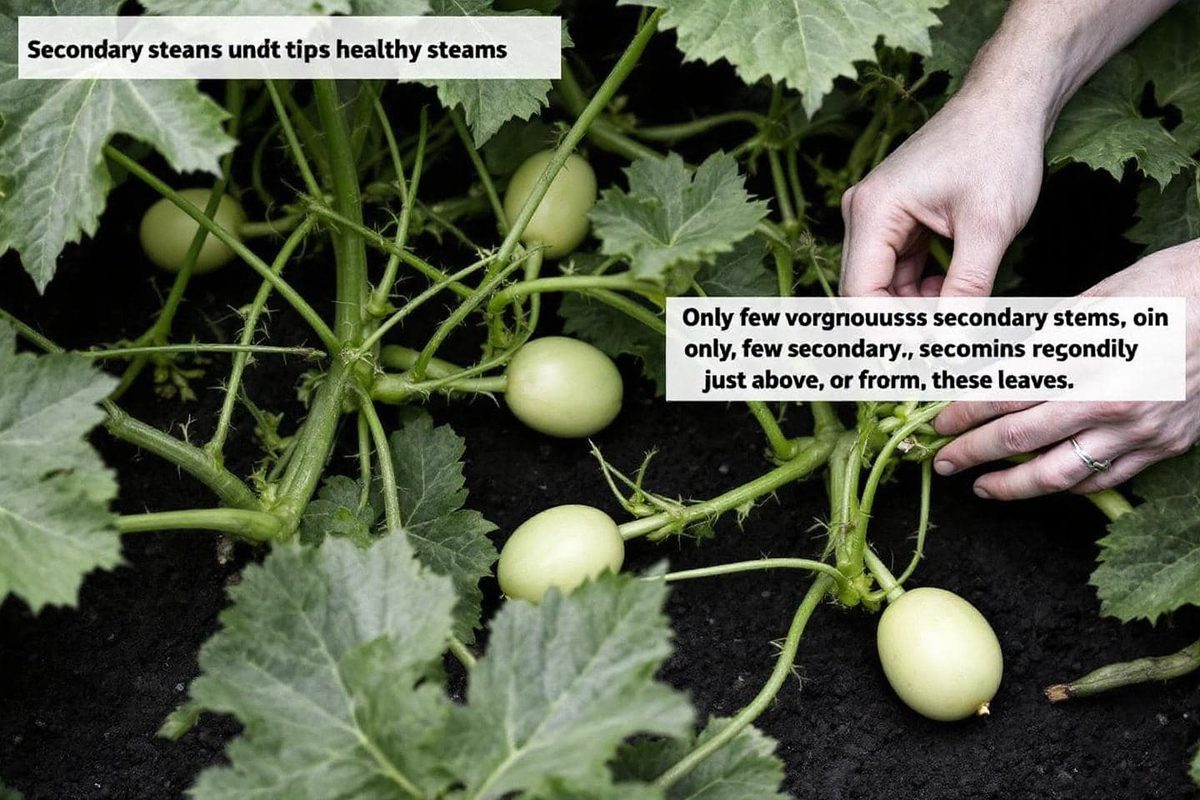
Watering, mulching, and post-pinch monitoring
Once you’ve performed the pinch, the work isn’t finished. June and July are critical months to support growth and ensure a harvest bursting with flavor.
After pinching the plants, you need to actively support their development with regular watering. The soil should stay fresh but never soggy. Too much water makes the fruit bland and invites disease. A thick layer of mulch—using grass clippings or straw—retains moisture and suppresses weeds.
Keep a close eye on things. Avoid flooding the leaves when you water to prevent mildew. Watch the leaf color and stem vigor. A well-maintained melon plant shows steady growth and deep green leaves.
Preventing disease and suckers for a solid harvest
Melons have many enemies: powdery mildew, aphids, and other pests love young shoots. Taking time to inspect each vine lets you intervene quickly without resorting to chemical treatments.
Also, remove “suckers”—those excessive shoots that appear after pinching—as they develop. This reduces competition between stems and helps the existing fruits mature properly.
Recap: Tips for XXL melons every season
Following these simple but precise steps makes an abundant melon harvest realistic, not a dream. It comes from careful observation and a bit of know-how that anyone can learn.
Key points for a generous vegetable garden
Remember these essential steps:
- Pinch the main stem at the right time (after the second leaf) to encourage branching.
- Trim secondary stems to focus sap on three sturdy vines.
- Thin the fruit (no more than three per secondary vine) to guarantee size and taste.
- Maintain the soil with controlled watering and effective mulching.
- Monitor regularly for diseases or unwanted suckers.
Adopt this habit: an expert gardener’s reflex
Pinching is passed down through generations or learned from an experienced neighbor. It quickly becomes second nature. In June, this meticulous yet quick gesture radically transforms the summer harvest. The result? Melons that are round, fragrant, and abundant. You’ll be proud to share their taste at a barbecue or family snack.
So, why not try this method this month? The pleasure of savoring your own melons, grown with care, is something you share and pass on. Your guests will be impressed… and you might just become a convert to this seasoned gardener’s ritual, for summers full of flavor and pride in the garden.