February looks like a graveyard for gardens. Gray skies. Frozen ground. Most people are waiting for March, or even April, before dragging out their gloves.
But the clock is ticking for the insects that will save your spring.
While you’re sipping hot coffee, a critical window is closing. You can build a sanctuary for pollinators right now. The secret isn’t a complicated irrigation system or expensive native wildflowers. It’s a single shrub that thrives in the cold. It’s often ignored in favor of flashy spring bulbs. Yet, planting it now guarantees a flood of butterflies and bees when the thaw finally hits.
Why February Beats Spring for Planting
The common wisdom is to wait until the soil warms up. This is a mistake.
Waiting until late spring means planting into soil that is already drying out. It means roots fighting for water before they’re established. Planting in February changes the game. The earth is still damp from winter rains. It’s cold, yes, but not frozen solid. That moisture is a lifeline.
When you plant now, the shrub focuses on one thing: roots. Not leaves. Not blooms. Roots.
By the time temperatures rise, your plant is already anchored. It has a head start on the competition. You are essentially pre-paying for next year’s bloom. It’s a foundation for a resilient ecosystem, built while everyone else is still asleep.
The Butterfly Bush: An Underrated Champion
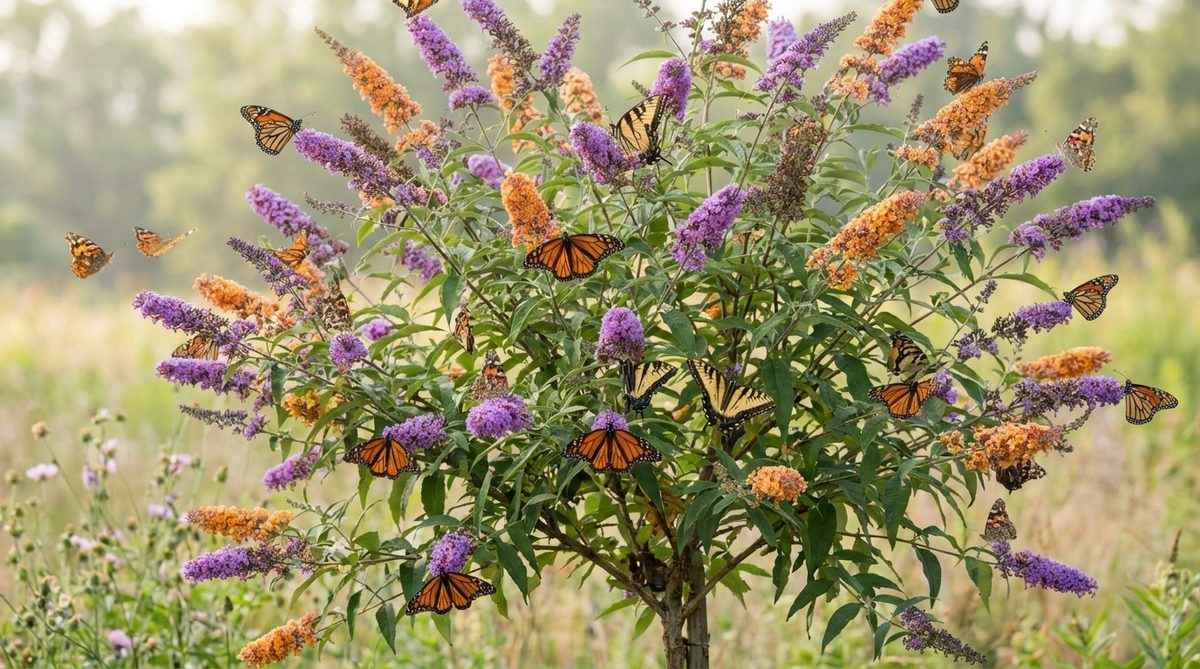
Meet the Buddleia. Also known as the butterfly bush. It’s the heavyweight champion of attracting Lepidoptera.
Most people buy them in June, covered in purple or white spikes. They look great. They cost more. And they’re stressed from transplanting in the heat.
Planting Buddleia in February offers distinct advantages:
- Cost: You can find bare-root plants or dormant specimens in late winter. They are significantly cheaper than large, flowering containers in early summer.
- Health: Dormant plants shock less. They settle in before the heat stress of summer hits.
- Performance: Established roots mean bigger flowers. More flowers mean more nectar. More nectar means more pollinators.
It’s a strategic move for the budget-conscious gardener who wants results, not just aesthetics.
How to Plant for Success
Don’t just dig a hole and shove it in. The soil matters.
Buddleia hates wet feet. If your soil is heavy clay, you need to amend it. Here is the step-by-step approach to ensure survival:
- Dig Deep: Make the hole twice as wide as the root ball. This encourages roots to spread outward quickly.
- Drainage is Key: If the soil is clay-heavy, mix in coarse sand or small gravel. Stagnant water will rot the roots. Period.
- Skip the Heavy Fertilizer: Do not load the hole with high-nitrogen fertilizer. This tricks the plant into growing leaves instead of roots. A handful of compost is enough. Let the plant feed itself later.
- Water Immediately: Even if the ground feels damp, water it thoroughly. This eliminates air pockets around the roots. Air pockets dry out roots in winter winds.
This isn’t hard. It’s just counter-intuitive. People fear the cold. But the cold is your ally here.
Pruning: The Brutal Truth About Flowering
If you already have a Buddleia, you might be afraid to cut it. It looks like you’re destroying the plant.
You aren’t. You’re saving it.
Buddleia flowers on new wood. This means the growth you see this year will bloom later this year. If you don’t prune, the plant gets leggy. It gets woody at the base. The flowers become small, scattered, and hidden deep inside the shrub.
The fix is severe pruning. Do it in late February or very early March.
Cut everything back. Hard. Leave only 20 to 30 centimeters (about 8 to 12 inches) of stem above the ground. Or, if it’s an older shrub, cut back to the main framework.
This shocks the plant into action. It forces it to push out vigorous new shoots. These new shoots bear the massive flower spikes. The nectar flow is intense. The butterflies arrive.
It looks naked for a month. It looks dead for a week. Then, it explodes.
Is it better to have a tidy shrub with no bees, or a chopped-down stump that becomes a feeding station for hundreds of insects?
The choice seems obvious, even if the plant looks like a stump. You are building a habitat, not a decoration. The ground is still cold. The pollinators are waiting. Start now.
February is still cold. Most homeowners are thinking about shelter, not shrubs. But this is the exact window to tackle butterfly bush maintenance. It’s not just about making the plant look tidy. It’s about survival for local pollinators.
Food sources are scarce right now. Urban gardens and concrete-heavy landscapes offer little to no sustenance. By pruning or planting now, you create a reliable food station. The buddleia blooms early and heavily. It acts as a gas station for insects.
Maximizing Nectar for Early Risers
Timing is everything. Pruning in late winter encourages vigorous spring growth. This leads to earlier flowering. More flowers mean more nectar. This directly supports species that emerge early.
You will see a shift in your garden’s visitors.
– Butterflies return sooner.
– Bumblebees find critical energy sources.
– Solitary bees forage where others struggle.
Over-manicured gardens often lack these resources. The buddleia fills that gap. It restores balance. It turns a private space into a biodiversity hotspot.
Low Effort, High Reward
The investment is minimal. The return is significant. A few hours in the cold now pays off for months. By spring, the shrub transforms.
“A small act of pruning in February creates a ballet of color for the rest of the season.”
Your windows become viewing platforms. The garden becomes an observation deck for nature. It’s a simple shift. One that benefits you and the local ecosystem equally.