Carbon monoxide earns the nickname “the silent killer” for a reason. It is an invisible, tasteless, odorless byproduct of incomplete fuel combustion. If you burn gasoline, wood, coal, propane, natural gas, or oil in your home, this gas is lurking in the exhaust. Poor ventilation allows it to pool. Dangerous concentrations build fast. Even a small tool like a chainsaw can release enough CO to make you sick if you are in a confined space.
The chemistry is brutal. Carbon monoxide binds to hemoglobin in your red blood cells. It steals oxygen’s spot. Your blood then carries the gas to your organs instead of oxygen. Long-term exposure to low levels can cause permanent damage to your brain, lungs, and heart. Short bursts at moderate levels trigger symptoms that mimic the flu or food poisoning. Burning eyes. Nausea. Dizziness. Severe headaches. Confusion. People often ignore these signs until it is too late.
Sleeping at night is when the threat peaks. If CO fills a room while you are unconscious, you may not wake up. Infants, the elderly, and those with respiratory or circulatory issues are at the highest risk for fatal poisoning. Maintenance helps. Proper ventilation helps. But the single most effective line of defense is installing a carbon monoxide detector.
These devices are not magic boxes. They are simple machines relying on specific sensor technologies to identify CO levels and trigger alarms. Their effectiveness relies entirely on correct installation and ongoing maintenance. You must test them regularly. You must replace sensors as the manufacturer dictates. Let’s look inside the unit to see exactly how it saves your life.
Inside a Carbon Monoxide Detector
The internal mechanics of a carbon monoxide detector are surprisingly straightforward. A plastic housing, roughly 3 inches (7.6 centimeters) in diameter, contains the critical components. The design varies by brand, but the core function remains the same. The parts work in unison to detect lethal gas and sound the alarm.
Here is what you will find inside the standard unit:
- The Sensor Cell : This is the heart of the device. Most modern units use electrochemical sensors. These cells contain a paste and two electrodes. When carbon monoxide enters the cell, it triggers a chemical reaction. This reaction generates a small electrical current. The strength of the current correlates directly to the concentration of CO in the air.
- The Circuit Board : This tiny computer processes the signal from the sensor. It monitors the electrical current. If the reading exceeds a preset threshold for a sustained period, it triggers the alarm. It filters out false positives from common household gases like alcohol or cigarette smoke.
- The Alarm Speaker : A piezoelectric buzzer or speaker. It emits a distinct, loud tone (usually around 85 decibels) to wake sleeping occupants. The pattern varies by manufacturer but is designed to be unmistakable.
- The Power Source : Whether battery-backed or hardwired with a battery backup, the power supply keeps the sensor active. Lithium batteries are preferred for their longevity and reliability.
- The Test Button : A simple switch that runs a self-diagnostic check. It verifies that the circuit board, speaker, and sensor are functioning correctly.
“If you can’t see it, smell it, or taste it, you can’t trust your senses. You need technology to tell you the air is toxic.”
Understanding the components helps you choose the right model. Not all sensors are created equal. Some use metal oxide semiconductor technology, which is cheaper but less precise. Electrochemical sensors are the gold standard for residential use. They are more sensitive and less prone to false alarms.
When shopping for a carbon monoxide detector, look for the sensor type first. Check for UL certification. Ensure the unit has a digital display if possible, so you can see CO levels in parts per million (ppm) rather than just hearing a beep. Place units on every level of your home. Install them near sleeping areas. Not in the garage, unless the garage is part of the living space.
Improper installation renders even the best sensor useless. Mount it at the height recommended by the manufacturer. Some CO is lighter than air. Some is heavier. Follow the instructions. Test the button monthly. Replace the battery twice a year when you change your clocks. Replace the entire unit every five to seven years.
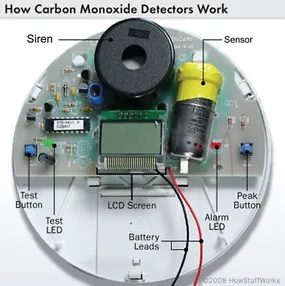
The heart of the unit is a tiny microchip. It sends an electronic signal that tells the rest of the detector what to do. This chip is fused to a copper-wired circuit panel that serves as the base. You won’t see this working, but it’s the brain.
The Hardware Inside
LEDs tell you the status. Green usually means good. Red might mean low battery or an alarm. Some models include an LCD panel for a digital readout of CO levels in parts per million (ppm).
Power comes from the building’s electrical system or a backup battery. You need a test/reset button to verify the alarm sounds. The detection chamber houses the sensor itself. This is where the CO sensor measures gas concentration.
In the US, sensors follow Underwriters Laboratories (UL) safety standards. If the sensor detects dangerous levels, it sends a pulse to the alarm. Higher concentration means faster response. At 70 ppm, the alarm might sound in an hour. At 400 ppm, it sounds in four minutes. The sound is about 85 decibels. That’s quieter than a lawnmower but shriller. It cuts through background noise.
Sensor Types
Not all detectors use the same technology.
Biomimetic Sensors
This tech mimics how CO affects hemoglobin in blood. A gel inside changes color when it absorbs CO. A separate sensor detects this color shift. The processor then triggers the alarm. Once the gel changes color, it must be reset in a CO-free environment. You can also find these in portable cards. If the disc turns dark, there’s dangerous CO in the air.
Metal Oxide Semiconductor Sensors
These use circuits on a silica chip. CO lowers electrical resistance when it contacts the circuitry. The processor notices and sounds the alarm. They use lots of electricity. Most plug into wall outlets. Battery-only models are rare for this type.
Electrochemical Sensors
Like metal oxide sensors, these track changes in electrical current. But they use electrodes in a chemical solution instead of an integrated chip. Electrochemical instant detection and response (IDR) sensors are common in professional gear. They detect dangerous CO levels instantly.
What If Your Detector Goes Off?
Panic helps no one. First, check for symptoms. Is anyone feeling sick?
If no one is sick:
1. Open windows and doors.
2. Ventilate the space.
3. Don’t go back inside if the alarm continues.
4. Call a professional to check fuel-burning appliances.
If someone has flulike symptoms:
1. Call 911 or local emergency services.
2. Leave the building immediately.
Do not wait. CO is silent and odorless. Your detector is your only warning.
Carbon Monoxide Detector Installation

Every year, US emergency rooms treat roughly 20,000 people for carbon monoxide exposure. 400 die from it. CDC.
Most nonfatal cases happen at home. That’s why you need a carbon monoxide detector. It’s not just a nice-to-have. It’s part of your basic safety kit. Think of it alongside your smoke detector.
Do some homework before you buy. Check local laws. Some areas mandate specific types. Others just want something working.
Decide on power source. Plug-in or battery.
Plug-in units slot into any wall outlet. You can move them if needed. But no battery backup? You’re blind during a power outage. Temporary blackout? Fine. Long winter outage? You might fire up a space heater or wood stove. Those burn fuel. They release CO. If your detector is dead because the power is out, you’re in trouble.
Battery units are usually mounted permanently. No outlet needed. But they can be finicky. They might mistake other gases for CO. False alarms. People move them. Then they’re not in the right spot.
For most homes, a mix works best. Follow the manufacturer’s placement guide. Inspect them regularly.
The National Fire Protection Agency (NFPA) has clear rules for carbon monoxide detector installation.
- Outside every sleeping area
- On every floor of the home
- Anywhere local law requires it
Link them. One alarm triggers all the others. You sleep. The whole house screams.
Installing detectors is step one. Step two is keeping your home from producing the gas in the first place.
Inspect furnaces and chimneys annually. Service them as needed. Open the flue before lighting a fire. Seriously.
Have gas appliances installed by a pro. Follow instructions. Don’t guess.
Use fuel-burning tools in well-ventilated areas. Only.
Keep vents clear. Leaves. Debris. Snow. Block furnace, water heater, and dryer vents. Clear them out.
Repair faulty tools. Lawn mowers. Chainsaws. If they run rough, they leak.
Check your car’s exhaust system. Leaks happen. Never idle your car in the garage. The CO will seep into the house. It happens.
Never use an oven to heat your home. It’s not a heater. It’s a cooking appliance.
Never bring a grill inside. Not even for a moment.
Never run a generator indoors. This one kills people who don’t think it will.
Test your carbon monoxide detector monthly. It’s your last line of defense. A malfunctioning stove or heater doesn’t announce itself. The detector does.
Frequently Asked Questions
Where is the best place to install a carbon monoxide detector in a home?
Place them near each sleeping area and on every level. Include the basement.
How often should carbon monoxide detectors be replaced?
Most manufacturers say every 5 to 7 years. Don’t wait for the chirp. Replace them on schedule.