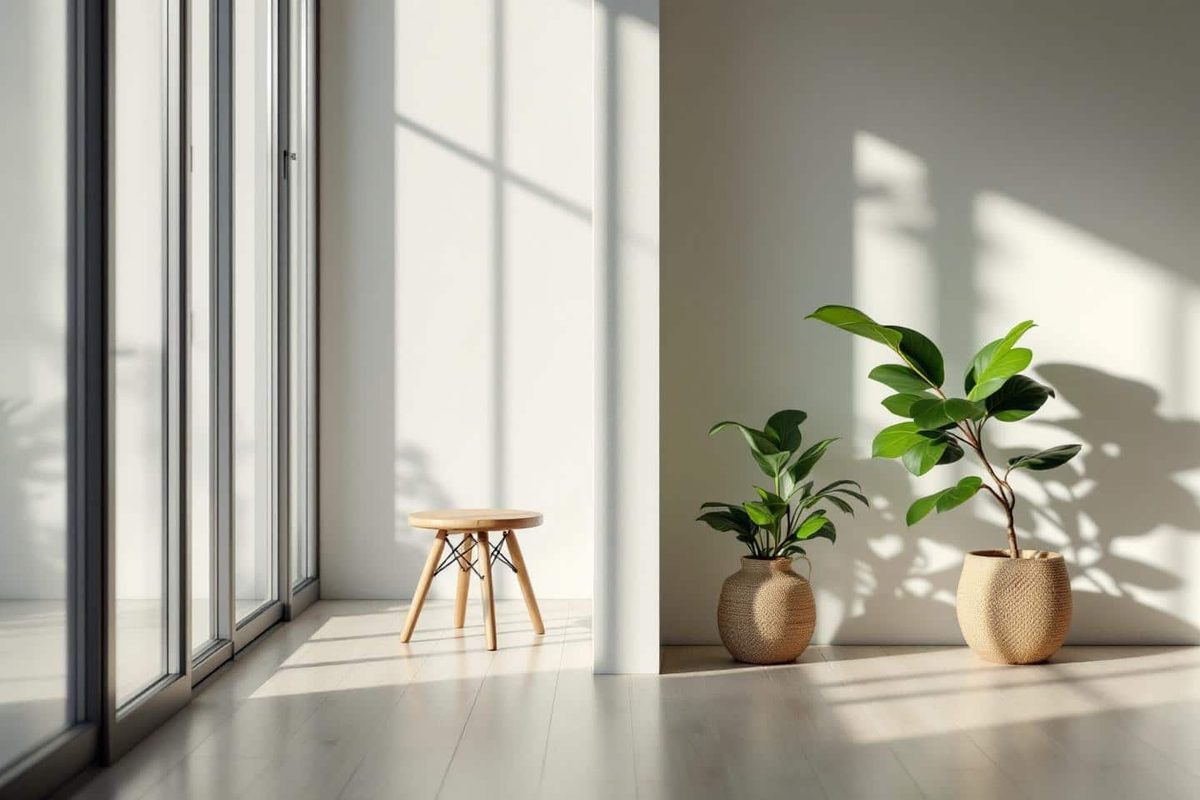
You know that feeling. You walk into your living room and your shoulders tense up. It’s not dirty. It’s not messy. It’s just… full. A subtle pressure sits on your chest. Visual noise. That is the opposite of luxury. In French design, we are used to layering. Textures. Colors. Furniture stacked against furniture. But there is a different approach coming from Japan. It is not about adding more. It is about subtraction.
The key is a word that does not translate easily. Ma.
It is often misunderstood as mere emptiness. It is not. It is the space between things that gives them meaning. It is the pause in music. The gap between brushstrokes in Ikebana. By embracing this concept, you can reset your home for the winter without buying a single new thing. You just need to create room for what matters.
What Is Ma and Why It Matters for Interior Stress
Ma is a concept rooted in Japanese aesthetics and Zen Buddhism. It defines the interval. The void. The negative space. In a Japanese tea ceremony, the silence between the whisk and the bowl is as important as the tea itself. In interior design, it means letting an object breathe.
Most French interiors suffer from overcrowding. We fill walls with frames. We fill shelves with knick-knacks. We fill corners with plants. Ma flips this script. It suggests that an object is only truly visible when it has room to exist. When everything is close, nothing stands out. When things are spaced out, each piece commands attention.
This is not austerity. It is curation. It is the difference between clutter and composition.
How to Implement Ma in Your Living Space
You do not need to strip your home to the bones. You can adopt Ma through small, deliberate shifts. The goal is to reduce visual weight. This lets light move freely. It creates a sense of calm that is especially needed as days get shorter and you spend more time indoors.
Start by looking at your current layout. Where is the eye forced to stop? Where is it stuck?
1. Create Visual Breathing Room
Move the sofa away from the wall. Just a few inches. It sounds minor. It changes the entire dynamic. The room feels larger. The furniture feels grounded rather than pinned. Do the same with side tables. Leave gaps. Empty space is not wasted space. It is active space.
2. Curate, Don’t Accumulate
Look at your shelves. Remove half of the objects. Keep only the items you genuinely love. A single vase on a large table has more impact than a crowded mantelpiece. When you remove the noise, the signal becomes clearer. Each remaining object gains status. It becomes an intentional choice, not just decoration.
3. Let Walls Breathe
French walls are often galleries. Hang one large piece instead of a grid of small photos. Or hang nothing at all. A blank wall is a rest for the eye. It offers contrast to the textures and colors in the room. If you must decorate, choose scale. One significant element beats ten small ones.
Room-by-Room Guide to Applying Ma
You can test this philosophy room by room. The impact is immediate.
- The Living Room: Clear the coffee table. Keep it clear during the day. On the buffet, leave empty space between objects. If you have a large rug, ensure the furniture floats on it rather than crowding the edges. This creates a “stage” for your seating area.
- The Bedroom: Reduce visual stimuli to promote sleep. Clear the bedside tables. Keep only a lamp and a book. Hide cords. Use baskets to tuck away daily clutter. The goal is a sanctuary. Minimalism aids rest.
- The Kitchen: Countertops are the first place clutter accumulates. Keep only the essentials out. Store small appliances. A clear counter feels clean and functional. Display only one or two beautiful items, like a ceramic jar or a bowl of fruit.
- The Bathroom: Limit the number of bottles on display. Use simple, uniform containers. Let the materials—stone, wood, tile—speak for themselves. Clutter here creates stress before you even step in.
- The Entryway: This is the transition zone. Keep it light. A single mirror on the wall adds depth. Remove coat racks when not in use, or tuck them away. The entry should feel like an exhale, not a hurdle.
Why This Works for Winter
As winter approaches, we retreat indoors. The instinct is to cocoon. To surround ourselves with warmth and comfort. But comfort does not require accumulation. It requires clarity.
Ma offers a way to feel cozy without feeling trapped. It reduces the mental load of maintaining a cluttered space. It makes cleaning easier. It makes the home feel more spacious than it is.
Try it this week. Pick one surface. Clear it. Leave one object. Step back. Notice the difference in light. Notice the difference in your own breathing.
It is a simple shift. But it changes how you inhabit the room. The empty space is not nothing. It is everything.
Living Better with Less: ‘Ma’ as an Antidote to Visual Overload
Applying ma releases an immediate sense of calm and clarity. As winter approaches, you spend more time indoors. Finding free space allows you to make the most of weak natural light, appreciate warm textures like wool, velvet, and matte cotton, and put your favorite objects back at the center.
It also works on your mood. The absence of clutter is soothing. Every new decoration, even small ones like a pine branch or a scented candle, finds its place instead of getting lost in the mass.
When Your Decor Reveals What Truly Matters
By freeing up space, you allow what really defines your home to appear. That touching photo on the buffet. A vintage tapestry inherited from family. Or simply the clear view of the garden or terrace, even on a gray November day.
Ma, far from emptying your interior of its soul, allows it to reveal what counts. It creates a true sense of luxury and well-being without major investments or unnecessary purchases. This philosophy is more relevant than ever. Sobriety, authenticity, and the art de vivre inspire winter decor, right down to the new collections launched this autumn by French and European retailers.
What if that feared emptiness was actually the most beautiful gift you could give your daily life?


