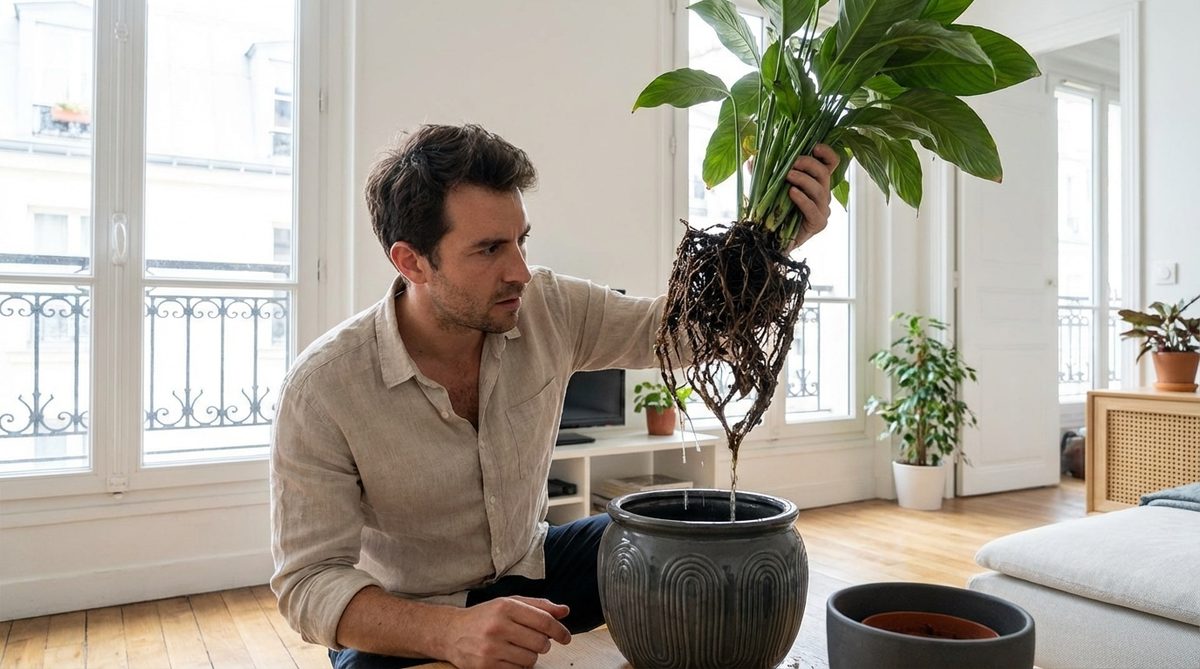
Spring has this attraction. You want green inside. You will find the perfect ceramic dish on the shelf. Smooth finish. Thin lines. It looks like it belongs in your living room. You buy it. You are ready to plant.
Don’t do it.
Not yet.
This beautiful pot can kill your plants. It’s not ceramic. It is due to lack of drainage. Most decorative containers are closed. They are designed for aesthetics, not botany. Planting directly into it creates a swamp. You won’t notice it at first. The surface looks dry. You water again. And again. The water has nowhere to go. It collects at the bottom. The roots rot. The plant dies.
This is a silent epidemic in the urban jungle. We prioritize style over functionality. We ignore biology. This way you can fix the problem without affecting the settings.
The Trap of Decor-First Design
Go to a garden center or home improvement store. See planters.
They are breathtaking. Matt black. Geometric patterns. Glazed white. They are perfect for your sofa. They look expensive.
But they are often traps.
The designers who create these pots are rarely botanists. They are product designers. Their brief is visual impact. Durability of ceramics? Safe. But plant health? It is secondary. Sometimes it is not even in the information sheet.
You see a pot. You assume it’s for planting. You shouldn’t.
There is a huge difference between what the corridor suggests and what the plant needs. The products are lined up next to the soil and fertilizers. It implies compatibility. It doesn’t have that.
This confusion is the biggest reason houseplants fail. You are not a bad gardener. You were sold the wrong tool.
Cache Pot vs. Pot: Know the difference
To save the plants, you need to understand two different objects. They look similar. They work completely differently.
1. Pot (planter)
This is the functional container.
* Material: Usually brown plastic, black plastic or unglazed terracotta.
* Feature: It has one or more holes in the bottom.
* Mission: Hold the soil. Let the water drain away. Let the roots breathe.
2. Cache pot
This is the decorative shell.
* Material: Ceramics, glass, metal, wood.
* Feature: It is waterproof. No holes.
* Mission: Hide the ugly plastic container. Protect your floor from splashes.
If you buy a “pot” that looks like a piece of art, it is almost certainly a cache-pot. By adding soil and plants directly to it, you create a closed environment. This is fatal for land plants.
Swimming pool effect
What happens in this sealed container?
In a normal pot, water goes in. It moistens the soil. The excess drains out of the bottom. The soil dries out a little between waterings. This cycle provides oxygen to the roots.
In a sealed pot, the cycle breaks.
Water gets in. It saturates the soil. It hits the solid bottom. It stops.
It pools.
This is invisible. You can’t see the water level at the bottom. The top layer of the soil may feel dry. Your instincts say “thirsty”. You water more.
Now you have a reservoir. A stagnant pond at the base of your plant.
Swamp of microbes
Standing water is bad. But the soil makes it worse.
Water mixes with fine soil particles. It is mixed with the fertilizer residue. It mixes with decomposing organic material.
It turns into mud.
This mud is oxygen free. The roots need oxygen. If they don’t get it, they start dying. But that’s not even the worst part.
The lack of oxygen creates an anaerobic environment. This is a breeding ground for harmful bacteria and pathogenic fungi. These microbes thrive in the sludge. They attack the roots.
This process accelerates as the temperature rises in spring. Fermentation begins. The pH value of the soil changes. The environment becomes toxic.
You aren’t growing a plant. You maintain a miniature septic tank in your living room.
The smell can reveal it later. At the moment, you will only see yellowed leaves. Drooping stems. Do you think you need more light? You move the plant. Nothing changes.
The plant is drowning. And you’re adding to it.
Roots need to breathe. We often forget this while focusing on water and fertilizer. Plants absorb nutrients using energy. That energy comes from oxygen in the soil pores. Good potting mix holds water but lets air circulate. This balance is everything for underground health.
In nature, soil drains well. Air moves freely. In a pot without holes, water pushes air out. The soil becomes saturated. Without oxygen, the plant stresses. It stops functioning normally. This happens even if the soil is packed with nutrients. The roots suffocate.
From Root Asphyxia to Tissue Decay
Chronic lack of oxygen kills root cells. Tissues begin to decompose. The plant becomes vulnerable to pathogens. This leads to root rot. It is a slow, silent killer.
Healthy roots are firm and light. Rotting roots turn brown. They become soft and slimy. They disintegrate when you touch them. The vascular system collapses. The plant cannot absorb water. It dies of thirst in a puddle. By the time leaves show signs, it is often too late. Rescue is nearly impossible. The damage is usually too advanced.
The Drainage Layer Myth: Why Gravel Doesn’t Work
Placing clay pebbles or gravel at the bottom of a pot is a common tip. It is wrong for sealed containers. It works in pots with holes. It fails or harms in pots without them. The idea is that water stays in the gravel. It separates from the soil above.
In reality, water fills the gaps in the gravel first. Once saturated, excess water rises into the soil. The whole pot floods. Adding gravel reduces root volume. The plant is confined. Stagnant water forms right under the roots. This accelerates decay.
The Perched Water Table Problem
Physics plays a role here. Water clings to soil via capillarity. It stays in the soil until saturated. It does not flow immediately into the gravel. This creates a wet zone above the drainage layer. It is called a perched water table.
In a pot without holes, this table rises dangerously close to the roots. Adding gravel amplifies saturation. You are not moving water away. You are pushing it closer to the root zone. Effective drainage requires evacuation. Trapping water under roots guarantees their destruction.
SOS Distressed Plant: Recognizing Signs of Overwatering
How do you spot a plant drowning in a bad pot? Symptoms are common. They are often misinterpreted. Leaves turn yellow. They go limp. The texture resembles overcooked vegetables. Brown spots with yellow halos spread across the foliage.
The trap is wilting. Rotten roots cannot absorb water. The plant wilts. It looks thirsty. The reflex is to water more. This worsens the situation. Always touch the soil. If it is damp but the plant looks dry, you have a root emergency. Act fast.
Smells and Gnats: Warning Signs
Smell completes the diagnosis. Healthy soil smells like humus. Earthy. Pleasant. In a non-draining pot, fermentation creates bad odors. Expect smells of mud. Or rot. Or even spoiled eggs. If you smell this near the pot, root asphyxia has started.
Sudden appearance of small black flies (fungus gnats) is another clue. These insects lay eggs in wet soil. They thrive in decomposing organic matter. If a cloud of gnats erupts when you touch the pot, the diagnosis is clear. You must act immediately. Save what you can. The clock is ticking.


