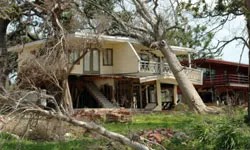
The phone rang hours after Karen finished her round in Florida. The sun was out. The air was warm. Then came the crack in her voice.
“A tree fell on the house.”
She wasn’t joking. A nor’easter was hammering New England while I sat in Orlando, feeling the distant shudder of the same storm system. By the time I landed, the damage was visible. A rotted oak had collapsed onto the living room roof. Water was pouring in. The dogs had bolted.
We were safe. The tree was mostly decomposed wood, which meant less structural crush and more debris. I called a roofer. I called my insurance carrier. I had paid premiums for twelve years. Now I needed to see if they would show up with a check or a brush-off.
An appraiser came out. He was professional. He understood the stress. A check arrived a few days later.
Not everyone gets that easy ride.
Take Paula Lazzari from Springfield, Massachusetts. Her home took a hit from a tornado in 2011. The initial offer from her insurer? Fix one broken window and replace the siding on the back wall. That was it.
Lazzari didn’t accept that. She filed a complaint with the state’s Office of Consumer Affairs and Business Regulation. The state intervened. The insurer eventually agreed to re-side the entire house, replace five windows, install a new stockade fence, and fix two ceilings.
It is a harsh lesson for any homeowner. You might think you can skip coverage to save money. You shouldn’t. Here is why carrying a policy is non-negotiable.
Why You Can’t Skip Home Insurance for Your Mortgage
Most states do not legally mandate homeowners insurance. You can own a house without it on paper.
Your bank, however, operates differently.
Lenders have a financial stake in your property. If the structure burns down or gets flattened by a storm, their collateral disappears. That is bad for their bottom line. To protect their investment, virtually every mortgage contract requires you to carry adequate insurance.
If you let your policy lapse, or if you simply refuse to buy one, the bank steps in. They will purchase what is called forced coverage (also known as lender-placed insurance).
Do not let this happen.
Forced coverage is predatory by design. The premiums are significantly higher than standard market rates. Furthermore, the payout only goes toward the bank’s loan balance. It does not cover your personal belongings. It does not rebuild your home to your specifications. It does not protect your family. It is designed to minimize the bank’s loss, not yours.
If you fall behind on payments, the lender will force you to pay that inflated premium until you secure your own policy. It is a costly trap. Pay your premiums on time. Keep the policy active.
The Hidden Cost of a Lawsuit
Insurance is not just about bricks and mortar. It is about liability.
Imagine a visitor slips on your icy driveway. Or a tree branch from your yard damages your neighbor’s car during a storm. Or, worse, a guest is injured while staying at your home.
Without liability coverage, you are personally responsible for medical bills, legal fees, and potential settlements. These costs can wipe out your savings. They can lead to wage garnishment. They can result in bankruptcy.
A standard homeowners policy includes personal liability protection. It covers legal defense costs and settlements if you are sued. It is a shield. Without it, you are walking barefoot through a minefield.
Liability Coverage for Guests and Pets
I keep the dogs leashed when Bill and Bernice visit. They are over sixty-five, and gravel driveways are unforgiving in winter. One loose rock, a patch of ice, or even a twig can send them sprawling. I don’t want them hurt. I also don’t want to be staring down a lawsuit. If they do slip, my insurance company says they’ll have my back. We can only hope it stays that way.
Most homeowner policies include liability coverage. It protects you if someone gets injured on your property. A dog bite? Covered. A fall on your porch? Covered. Standard policies often cap this protection at $100,000, but you can buy more. This coverage pays for medical bills and property damage. It also hires the attorney who defends you in court.
What Happens If Disaster Strikes?
If fire, tornadoes, hurricanes, or nor’easters wreck your house, homeowners insurance steps in. It pays to repair or replace the structure. There is one major exception: floods. If you live in a flood zone, you need separate coverage.
Here is the hard truth: about 75 percent of U.S. homeowners don’t have enough insurance. They are underinsured. You need enough coverage to rebuild the house and replace its contents from scratch. Not just the market value of the land. The cost to rebuild.
Dwelling protection covers the main house. It also covers attached structures like garages. It includes plumbing, electrical wiring, heating systems, and permanently installed air conditioning. Fences, sheds, guest houses, and detached garages fall under this too. Check your policy. Make sure the limits match the current cost of labor and materials in your area.
Replacing Personal Property
When your stuff gets destroyed, the policy reimburses you. Furniture. Appliances. Clothing. Electronics. The items don’t have to be in the house. If they are in a storage locker or at your kid’s school, they are still covered.
You have a choice in how to value these items. You can choose actual cash value or replacement cost.
- Actual Cash Value: This accounts for depreciation. You get what the item is worth today, not what you paid for it. If your ten-year-old couch is destroyed, you get ten percent of its original value, not the full price.
- Replacement Cost: This pays what it costs to buy a new, similar item today. No depreciation. It is more expensive upfront, but it saves you when disaster hits.
Most companies limit personal property coverage to 70 percent of your dwelling coverage. If your home is insured for $100,000, your belongings are likely capped at $70,000. High-value items like jewelry or art often have specific sub-limits. You may need a rider for those.
Medical Payments for Guests
Bill slips. He breaks a hip. He doesn’t sue me. He just wants his medical bills paid. His guest medical coverage kicks in.
This is part of most homeowner policies. It pays for injuries to guests on your property, regardless of fault. It covers ambulance rides, X-rays, surgery, and hospital stays. It is a no-fault coverage. It prevents small injuries from turning into lawsuits. It keeps the peace.
Protecting Your Equity
Your home is likely the biggest investment you will ever make. Homeowners insurance protects that equity. Equity is the value of the property minus any mortgage or liens. When you renovate, your equity grows. Insurance ensures that if the house is destroyed, you don’t start from zero. You can rebuild. You can keep the asset that supports your financial life.
Natural Disaster Protection
Standard policies cover windstorms, hail, lightning, and explosions. They do not cover earthquakes or floods. If you are in a high-risk area for these, you need separate policies. Earthquake coverage is usually a separate deductible, often a percentage of your home’s value rather than a flat fee. Flood insurance is available through the National Flood Insurance Program or private insurers. Do not assume your standard policy covers these events. Verify it.
Loss of Use Coverage Explained
You don’t have to wait for a tornado to lose your home. A single storm can do the trick. Think back to the nor’easter that slammed Connecticut in October 2011. It wasn’t a hurricane. It was just heavy snow and wind. The leaves were still clinging to the trees, adding tons of weight. Branches snapped and brought down power lines.
One friend down the road had a massive tree tear through her roof. No one was hurt. That was the lucky break. But the house? Uninhabitable. There was a gaping hole where the ceiling used to be. Her insurance company didn’t just send an adjuster. They paid for a hotel. They covered meals. They covered every extra cost of living somewhere else until contractors patched the roof.
This is called loss of use coverage. It kicks in when your home is damaged so badly you can’t live in it. Standard policies handle this. They reimburse you for hotels, restaurants, and other living expenses. Most insurers cap this at 20 percent of your total dwelling coverage. Do the math. If your home is insured for $200,000, you have roughly $40,000 to spend while displaced. That’s a lot of hotel rooms. It’s enough to keep you fed and safe while the rebuild starts.
Don’t assume natural disasters are all covered the same way. Homeowner insurance pays for windstorms, tornadoes, and hurricanes. It even covers adjoining structures if they get destroyed. But there are gaps. Earthquakes usually require a separate policy. Flooding is the big one. Most standard home policies exclude flood damage completely. If your basement takes on water from rising rivers or heavy rains, you’re on your own unless you bought separate flood insurance. The National Flood Insurance Program (NFIP) is the go-to federal option. You can’t rely on your standard homeowner’s policy for that.
Protection Against Robbery and Theft
Insurance isn’t just about wind and water. It’s about people, too. Burglary is a real risk. You might think your alarm system makes you a bad target. It helps. But it doesn’t guarantee safety. Standard policies include protection against theft. If someone breaks in and takes your TV, jewelry, or tools, your policy responds.
This coverage often has sub-limits. High-value items like fine art or expensive jewelry might not be fully covered under the standard theft clause. You might need a rider or scheduled personal property endorsement for those. Check your policy limits. Don’t assume everything is covered up to the full value of your home.
“Most standard home insurance policies include protection against burglary and theft, but high-value items often require additional coverage.”
Keep receipts. Take photos of your belongings. An inventory list helps when you file a claim. It proves what you had and what was taken. Without proof, you’re just asking for money based on memory. Insurance companies need documentation.
My Great Dane and two other large dogs serve as my primary security system. If an intruder is stupid enough to ignore them and survive the encounter, my homeowner’s insurance policy steps in. It covers theft. The policy will reimburse you based on either actual cash value or replacement cost, depending on what you chose when you signed up.
To avoid a headache when filing a claim, you need an inventory. Not just a mental list. A physical one. Document high-value items on paper. Take clear photographs. Keep receipts in a safe deposit box or a fireproof safe at home. Do not store this critical data solely on a computer or in the cloud. If a burglar breaks in, they might steal your laptop or hack your accounts. Paper doesn’t have a password.
Why Insurance Matters More Than the Payout
Peace of mind is the real product you are buying. I know that sounds like corporate speak. I’m not trying to sell you a policy here. I’m saying it’s unavoidable. You hope a tornado never tears your roof off. You hope a fallen oak tree never crushes your living room. But when those rare, catastrophic events happen, you will be glad you paid the premium.
Here is the hard truth: insurance companies are not your friends. To them, you are a number on a spreadsheet. They want to pay as little as possible. They will hedge. They will balk at claims. They might even suggest your contractor is unreliable just to delay payment. Remember, that is your money. Stand your ground. If the adjuster treats you unfairly, call your state’s consumer protection agency or the department of banking and insurance. It worked for Paula Lazzari in Springfield, Massachusetts.
How to Choose the Cheapest Home Insurance Without Losing Coverage
Cost matters. The National Association of Insurance Commissioners reports the average annual premium is around $1,211. That number is a mean. It varies wildly by state and home value.
So, which insurance company is the best? There isn’t one. You have to compare quotes.
Consumer Affairs lists the top five providers as State Farm, The Hartford, Farmers, Allstate, and USAA. These companies are reliable. But are they the cheapest? Often, no. Many policyholders report that Travelers offers some of the lowest rates on the market today.
But cheap is dangerous if the coverage is thin. You need enough money to replace your house and its contents in a worst-case scenario. Don’t let the price tag blind you to the limits.
Can you purchase homeowners insurance online? Yes. You can get free quotes instantly. Some carriers let you finish the entire process digitally. Others start online but force you onto the phone to bind the policy. Compare both options.
Final Thoughts
Buy enough coverage. Document your stuff. Stand up to the insurers if they try to lowball you. And sleep soundly knowing your dogs, and your policy, are watching. The rest is up to luck.