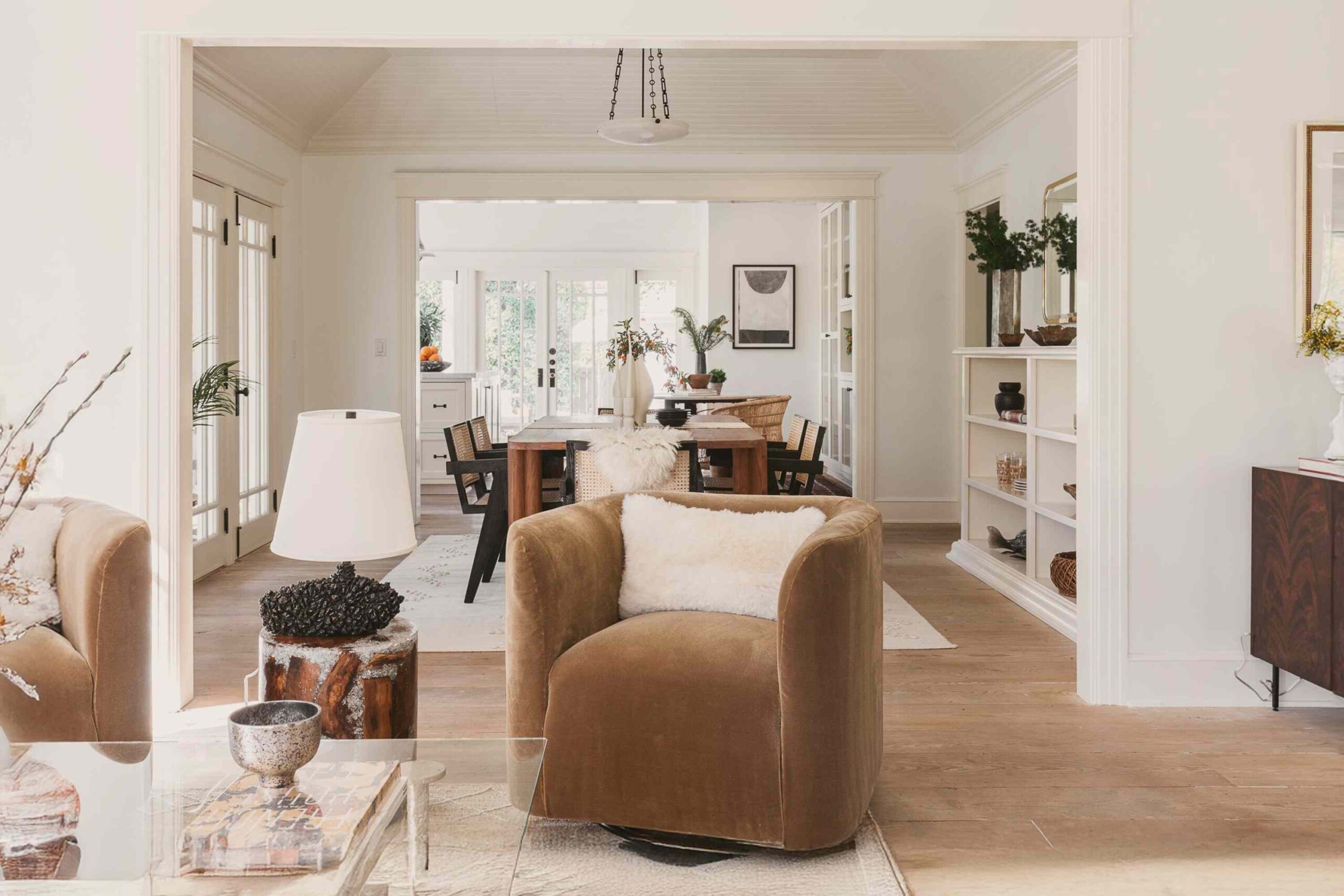
Stark white is cold. Off-white breathes.
It’s the difference between a gallery wall and a living room. Real homes need that little bit of cream, gray, or warmth to soften the blow of natural light. Or artificial light. Leading designers swear by these shades, using them again and again not because they’re boring, but because they work. They hide the clutter. They let the wood sing.
Here are the ones sticking to their brushes.
The Universal Trickster
Sherwin-Williams Origami White gets a lot of play. Designer Jeremiah Young uses it on clients and his own walls. It’s a sleight of hand.
“It’s a great sleight of mind that could be used nearly anywhere,” Young says. It lacks the harshness of whites leaning gray or blue, yet stays white enough to backdrop any spectrum.
Navajo White, also from SW, plays a different tune. It looks a bit yellow on the chip, sure. But put it next to warm accents? Magic. Pair it with black when you don’t want high contrast? Done.
The Heavy Hitters
Farrow & Ball fans love the pigment depth. Natural minerals make the color feel substantial.
Young goes for Wimborne White when he wants a whole-home backdrop. It hugs natural wood finishes, grounding the room. School House White is quieter, per designer Rebekah Murphy. Warm, understated, with a “quiet depth” that loves oak floors and aged brass. Effortless? Maybe. But it feels like it.
Murphy also swears by Benjamin Moore Swiss Coffee. Creamy but not heavy. It suits traditional homes with vintage rugs and stone, slipping into hallways and dining rooms with subtle elegance.
Then there is Pointing. Cut with red. It glows.
“Flatters both natural and artificial light,” Murphy notes. Use it in kitchens or nooks with earthy tones like mushroom or olive. Refined without trying too hard.
The Chameleons
Sometimes you want mystery.
Monique Holland points to Benjamin Moore French Canvas. The new “in-color”? Probably. It holds green, beige, and gray undertones simultaneously. Cool or warm depending on the room’s soul. Pair with metallics, grays, soft woods. It changes its clothes.
Benjamin Moore Natural Cream leans deeper, flirting with light greige for those who fear beige is too much, but pure white is too little.
Who decides what’s neutral anyway? Maybe nobody should. Just paint it.