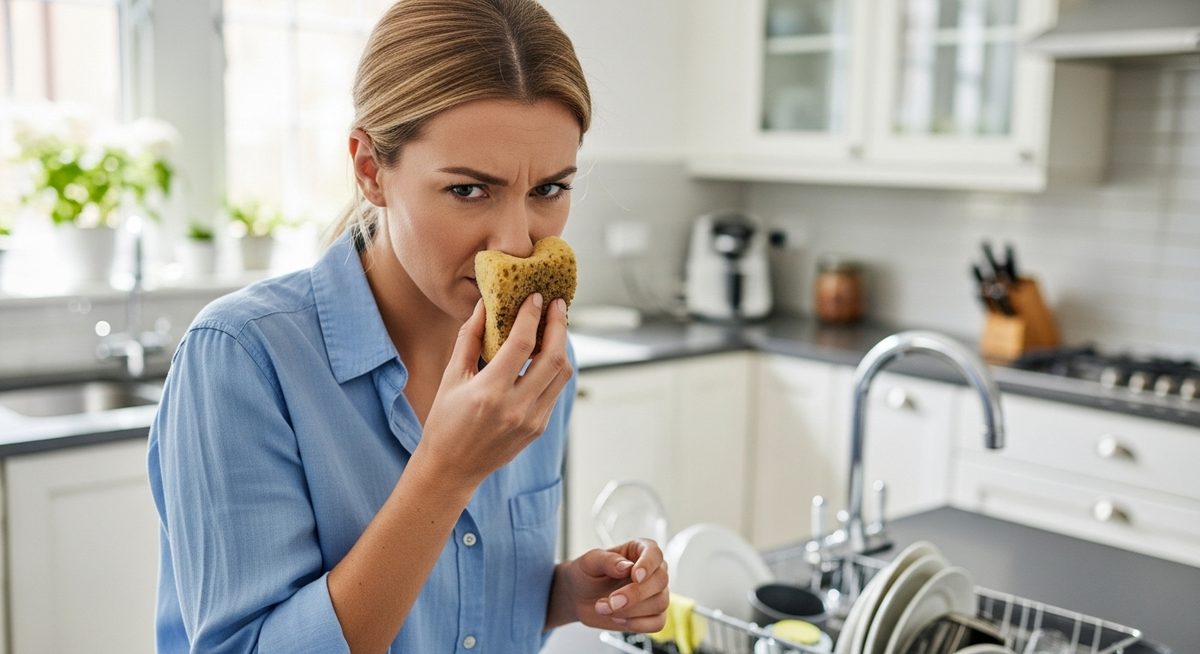
The slightly sour smell that emanates from the sponge every time you return to the kitchen is a sign of danger. You wash it. You use soap. You even rinse it thoroughly. Still, it smells. Despite all your best efforts, it still seems to be actively attracting mold and bad odors.
The new semester begins and autumn arrives, when the temperature drops. We spend more time inside. The kitchen is in full use. The sponge gets dirty faster. Keeping it fresh, clean and safe shouldn’t be a puzzle. But it often feels that way anyway.
There is an easy and quick way to solve this. We remove mold and bacteria without expensive products or unclear ingredients. Everything you need is already in your pantry.
Why Does Your Sponge Smell So Bad So Quickly?
The moment you finish the dishes, the sponge takes on a stale, trapped smell. We know this feeling all too well. The reason is simple. The sponge retains moisture. This creates an ideal breeding ground for bacteria and mold.
Food particles remain in the fibers. Water accumulates in the holder. You miss small corners during cleaning. All these factors together create a suitable environment for microbial growth. With the arrival of autumn, the air has cooled. Interiors become less ventilated. The problem becomes even more serious. A bad smell is the first warning sign. If no measures are taken, symptoms will appear within a few days.
The Hidden Dangers of a Dirty Sponge
A dirty sponge is more than just an olfactory nuisance. It is a risk to kitchen hygiene and health. If the bacteria grow out of control, they can transfer to the dishes. They also spread on the counter. They linger on your hands.
Most people think that rinsing with hot water is enough. This is not true. Without proper drying or treatment, heat alone is usually not enough to kill the deepest bacterial colonies. The sponge becomes a reservoir for pathogens. Salmonella. E.coli. These are not just theoretical risks. If contaminated tools are used to clean your plates, they pose a real threat.
The goal is simple. Stop the cycle. Break the mold. Restore freshness. You don’t need a microbiology degree to do this. All you have to do is change the way you care for the porous foam.
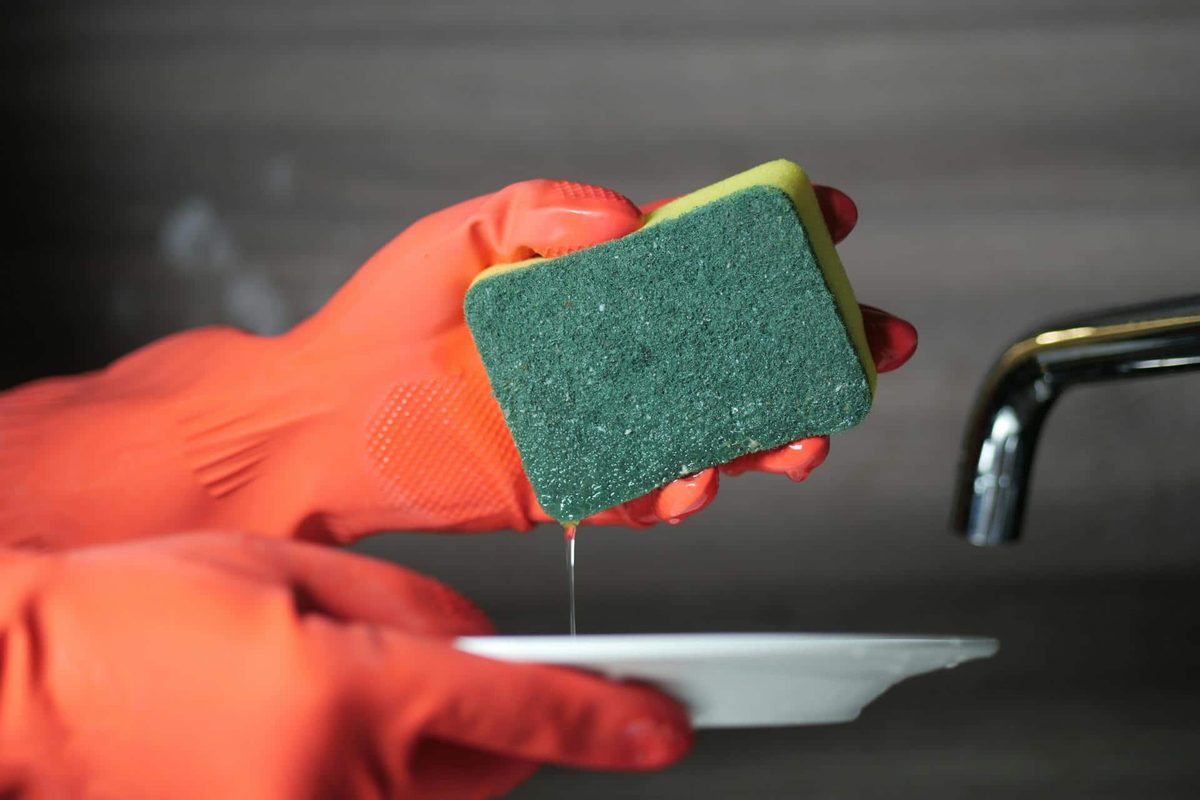

A smelly sponge is usually the first sign that it needs to be replaced. But odors aren’t the only hidden danger. Beneath the harmless surface, a dirty sponge is a veritable laboratory of bacteria. Bacteria, mold and various microorganisms grow there. You can contaminate dishes, countertops, hands and food during cleaning. This growth can cause digestive problems, allergy flare-ups, or simply make the environment unhealthy. Especially in the kitchen, which you use many times a day.
We have to be even more careful when cold waves arrive. I’ll make more sauce. You get dirtier dishes. This means that the sponge is more likely to get dirty. Prevention is better than cure. We need simple, fast and effective disinfection solutions.
Restore your sponge to its original state in seconds with a magical gesture
The miraculous solution lies in the ways of the ancestors. You can deep sterilize your sponge by quickly heating them in the microwave or soaking them in hot salt water. This approach is both environmentally friendly and economical. Perfect for autumn home care. The materials needed for hot water cleaning are:
- 500 ml of hot water
- 1 tablespoon kosher salt
Depending on your equipment, you can choose between two simple techniques. First, put the moistened sponge in the microwave. Heat on high for 30-60 seconds. Heat quickly destroys bacteria and mold. It also neutralizes odors. Be very careful to avoid fire hazard. Allow to cool completely before handling.
If you don’t have a microwave, a kosher salt bath is an unbeatable option. Dissolve the salt in boiling water. Soak the sponge in water for about 15 minutes. Then rinse thoroughly. Salt acts as a natural disinfectant. Absorbs bacteria and removes odor-causing residues. These functions are faster than a dishwasher. Easily make your sponge look new.
Create good habits: easy tips to keep your daily sponge fresher for longer
There are a few simple ways to keep your sponge clean. Rinse thoroughly after each use. Squeeze out as much water as possible. This significantly reduces moisture, which is the most important factor in microbial growth. Dry freely. Ideally hung vertically in a dry place. This prevents the growth of mold and slows down the development of odor.
Use the microwave or salt bath technique once a week as preventative maintenance. Change the sponge every 2-3 weeks. If it rubs on a cutting board or raw meat, wipe it off often. With Halloween and fall family gatherings approaching, it’s wise to bet on a healthy sponge to protect your guests. Finally, if you want to reduce your environmental impact, prioritize washable or natural sponges. Use these tips to ensure cleanliness, durability and freshness all year round.
The power of a cleaning sponge cannot be underestimated. Make cooking fun and keep the whole family safe. A simple gesture. You can easily prepare it with a pinch of kosher salt or in the microwave. that’s it. The kitchen is now ready for autumn without any nasty surprises. Kitchen hygiene starts with these important details.


